Weekly Newsletter
Cotton Market Weekly Highlights
Weekly Cotton Market Update – Week 14, 2026

Cotton Market Weekly Highlights
Big shifts are building across cotton. Policy, sustainability, and trade are all moving at once. Here’s what happened this week in cotton:
TEXCON 2026 maps textile future:
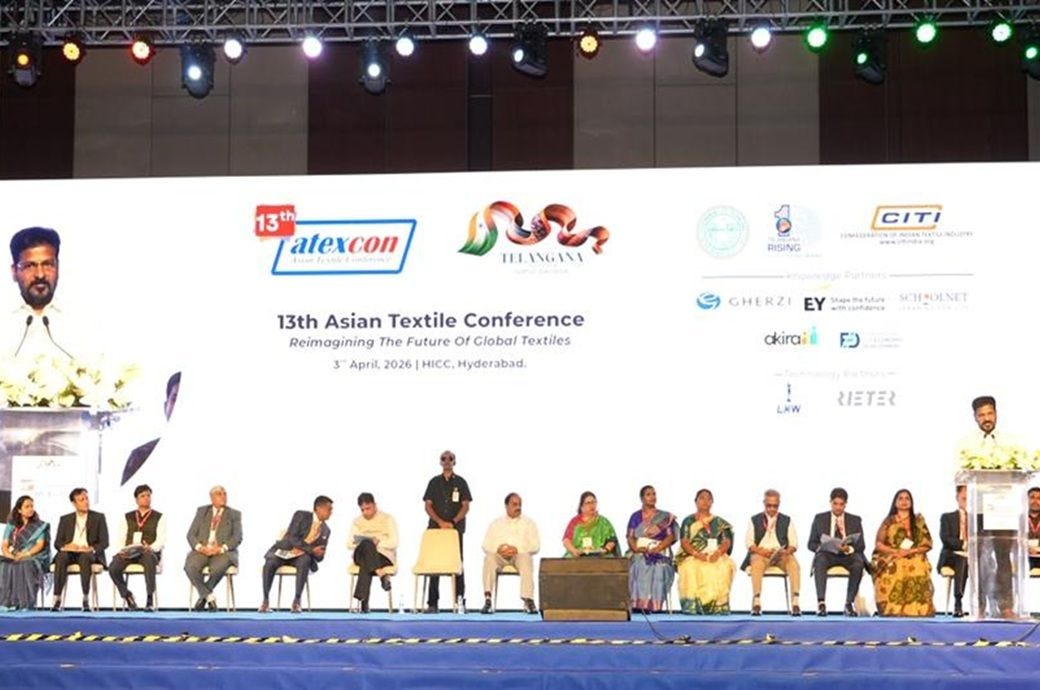
ATEXCON 2026 was held in Hyderabad on April 2 and 3, 2026, hosted by the Confederation of Indian Textile Industry and the Government of Telangana. The conference centred on “Reimagining the Future of Global Textiles,” with India’s $100 billion textile and apparel export ambition for 2030 anchoring discussions across fibres and fabrics, manufacturing and supply chains, and markets and trade. For the cotton value chain, this keeps fibre competitiveness, supply-chain efficiency, and trade access at the centre of future industry planning. This suggests cotton’s position will depend not just on crop output, but on how well India aligns its fibre strategy with export growth.
Sustainability moves to the centre:
At the CMAI and SU.RE ECOSTITCH Sustainability Conclave on April 3, 2026, Textile Commissioner Vrunda Desai said sustainability and circular economy are central to the sector’s future. The discussion noted textiles contribute 2-3% of India’s GDP and 11% of industrial output, while stressing water stress, MSME upgrading, and the role of FTAs in competitiveness. For cotton-linked mills, processors, and sourcing chains, this sharpens the commercial case for cleaner production and resource efficiency. Net-net, cotton competitiveness will increasingly hinge on whether regional clusters can upgrade fast enough to meet buyer and policy expectations.

ICAC sees a tighter 2026/27 balance:
ICAC’s early 2026/27 outlook projects global cotton lint production down 4% to 24.9 million tonnes, while consumption stays around 25 million tonnes. It also sees global trade falling 2.5% to 9.6 million tonnes, with Bangladesh remaining the largest importer at 1.8 million tonnes and the top six importers accounting for about 80% of world imports. That matters because a tighter balance can support cotton prices, but weak demand and trade disruptions still cap confidence across the chain. Expect cotton trade flows and procurement decisions to stay highly sensitive to policy shifts, tariffs, and freight conditions.
Better Cotton raises regenerative bar:
Better Cotton’s Principles & Criteria version 3.2 took effect on April 1, 2026, as part of its shift toward a regenerative standards system. The update strengthens emphasis on soil health, biodiversity, water management, pesticides and fertilisers, livestock where relevant, and revisions to management, natural resources, crop protection, and decent work for better clarity and auditability. For cotton growers and supply chains, this lifts the operating bar on how regenerative claims are defined and checked in the field. This suggests cotton programmes will face tighter scrutiny on practice quality, not just broad sustainability positioning.

© 2026 Cotton Guru. All Rights Reserved. | Designed by AdvertSneak Technology